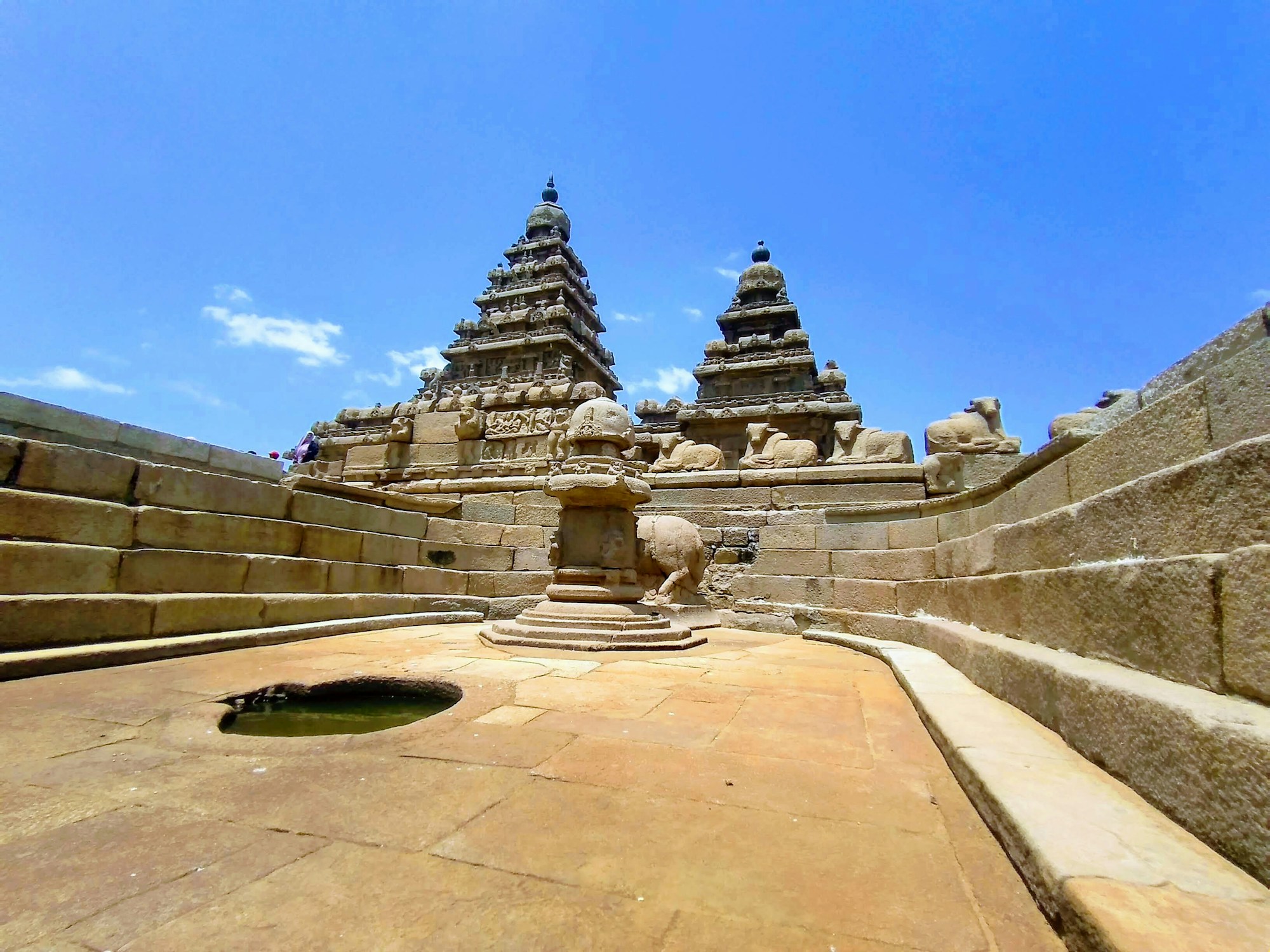
The Shore Temple has taken the Bay of Bengal's wind head-on since the early eighth century — the finest structural temple of the Pallava dynasty, and by legend the last survivor of Seven Pagodas that once lined this coast. The 2004 tsunami briefly pulled the sea back far enough to reveal submerged structures offshore, feeding the old story new life.
Its twin spires shelter shrines to Shiva and a reclining Vishnu, ringed by weathered Nandi bulls. The granite has softened under thirteen centuries of salt air into something between architecture and geology — best read in the first slanted light of day.
Visiting Well
- Sunrise, when the temple stands between you and the sea's first light, is the defining hour.
- One ticket covers the Five Rathas and Arjuna's Penance — walk the full Pallava ensemble.
- The stone reflects hard midday sun; carry water and take the carving workshops in the shaded village lanes.
How Elevated India Arranges It
We start at the Shore Temple at first light, work inland through the Penance relief and Rathas with a sculpture historian, and finish at a working atelier where the same chisels still ring.
Questions, Answered
What are the Seven Pagodas of Mahabalipuram?
A legend that seven temples once stood on this shore, of which the Shore Temple alone survives. The 2004 tsunami's receding waters briefly exposed submerged stone structures offshore, renewing scholarly interest in the tale.
How old is the Shore Temple?
It was built in the early 8th century (c. 700–728 CE) under Pallava king Narasimhavarman II — among India's oldest structural (built, not rock-cut) stone temples, now UNESCO-listed.
Journeys That Take You There
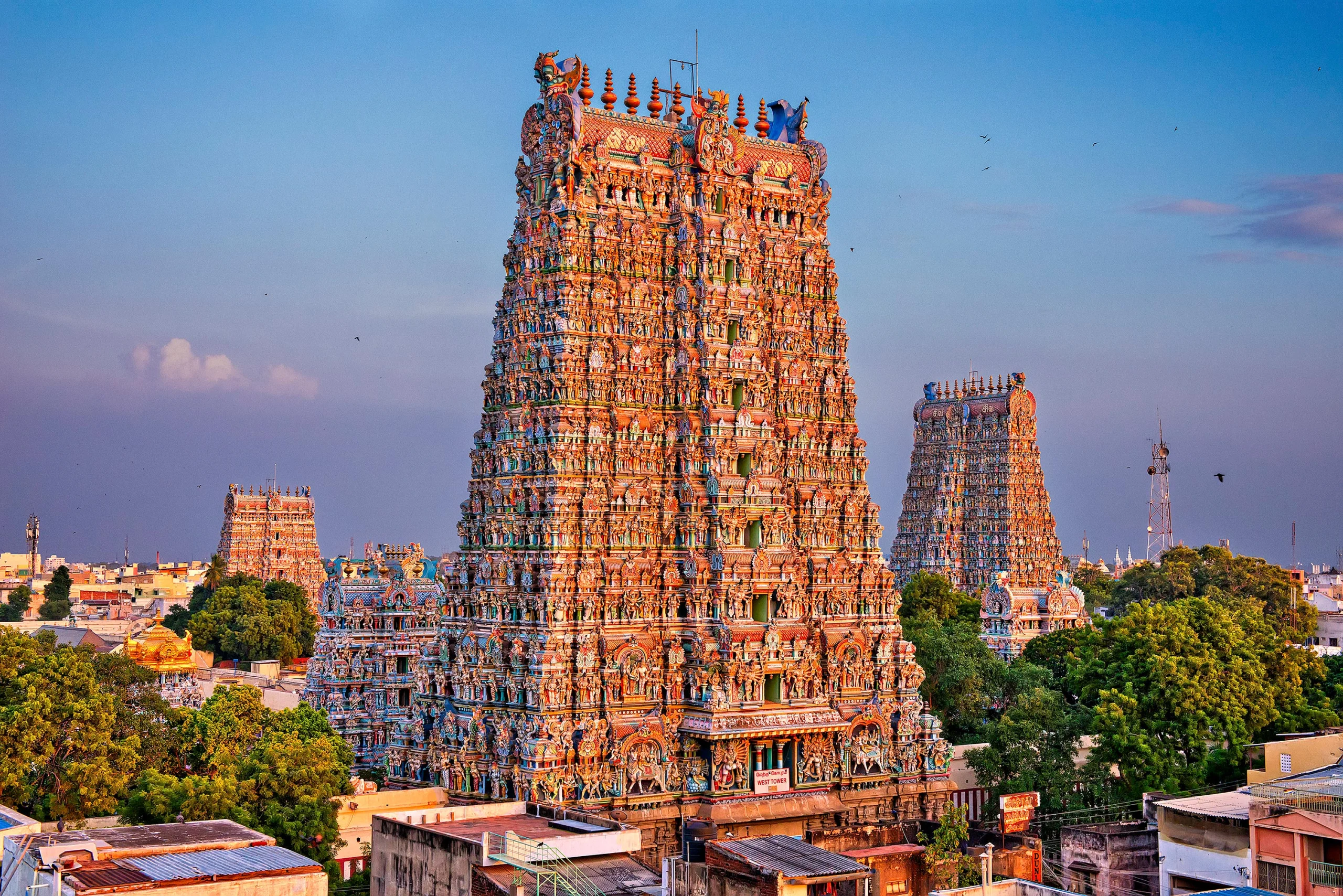
Explore the destination guide: Mahabalipuram, Tamil Nadu ↗