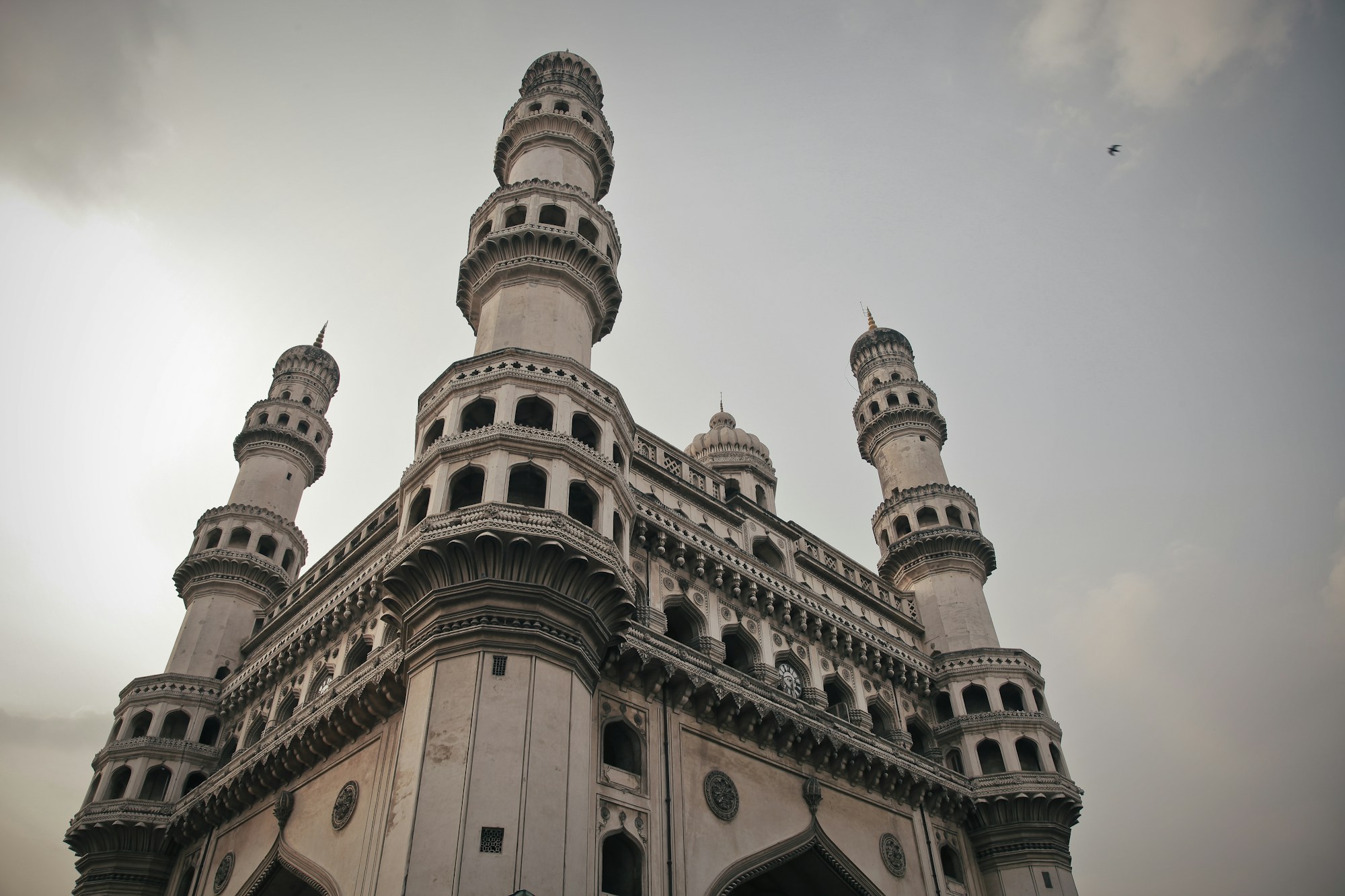
Muhammad Quli Qutb Shah raised the Charminar in 1591 as the ceremonial heart of his new city — four grand arches facing four royal roads, four fifty-six-metre minarets above them, and a mosque tucked into the upper floor. Hyderabad has kept its bearings by it ever since.
The monument's real gift is its quarter. Laad Bazaar runs west in a glitter of lacquer bangles; pearl traders grade strands in shopfronts their families have held for generations; and the Old City's kitchens — biryani, haleem in season, Irani chai — perfume the whole precinct.
Visiting Well
- Morning for the monument and gentler lanes; evening for the bazaar at full glitter and the floodlit arches.
- Bargain in Laad Bazaar with a smile and no hurry — it is expected choreography.
- The Mecca Masjid and Chowmahalla Palace sit within a ten-minute walk; take them together.
How Elevated India Arranges It
We walk the quarter with an Old City native — pearls graded in your palm, bangles lacquered to order, and the right Irani café for the chai that ends the morning.
Questions, Answered
Why was Charminar built?
Muhammad Quli Qutb Shah built it in 1591 to mark the founding of Hyderabad — by popular tradition, in gratitude for the end of an epidemic. Its four arches aligned with the new city's principal roads.
What is Laad Bazaar famous for?
The lane beside Charminar has specialised for centuries in lacquer (laad) bangles studded with stones, along with pearls, brocades and bridal finery — Hyderabad's signature shopping street.
Journeys That Take You There
Explore the destination guide: Hyderabad, Deccan ↗