Indian classical music is built not on fixed compositions but on the ragaRagaThe melodic framework of Indian classical music — a set of notes, and rules for moving between them, that a musician improvises within.Read in the glossary — a melodic framework, a set of notes and the rules for moving between them, within which a musician improvises in the moment — and understanding that single idea unlocks one of the world's great musical traditions. A raga is not a tune but the grammar a tune is made from, and once a listener grasps this, an evening of Indian music stops being decorative background and becomes something to follow, like a conversation.
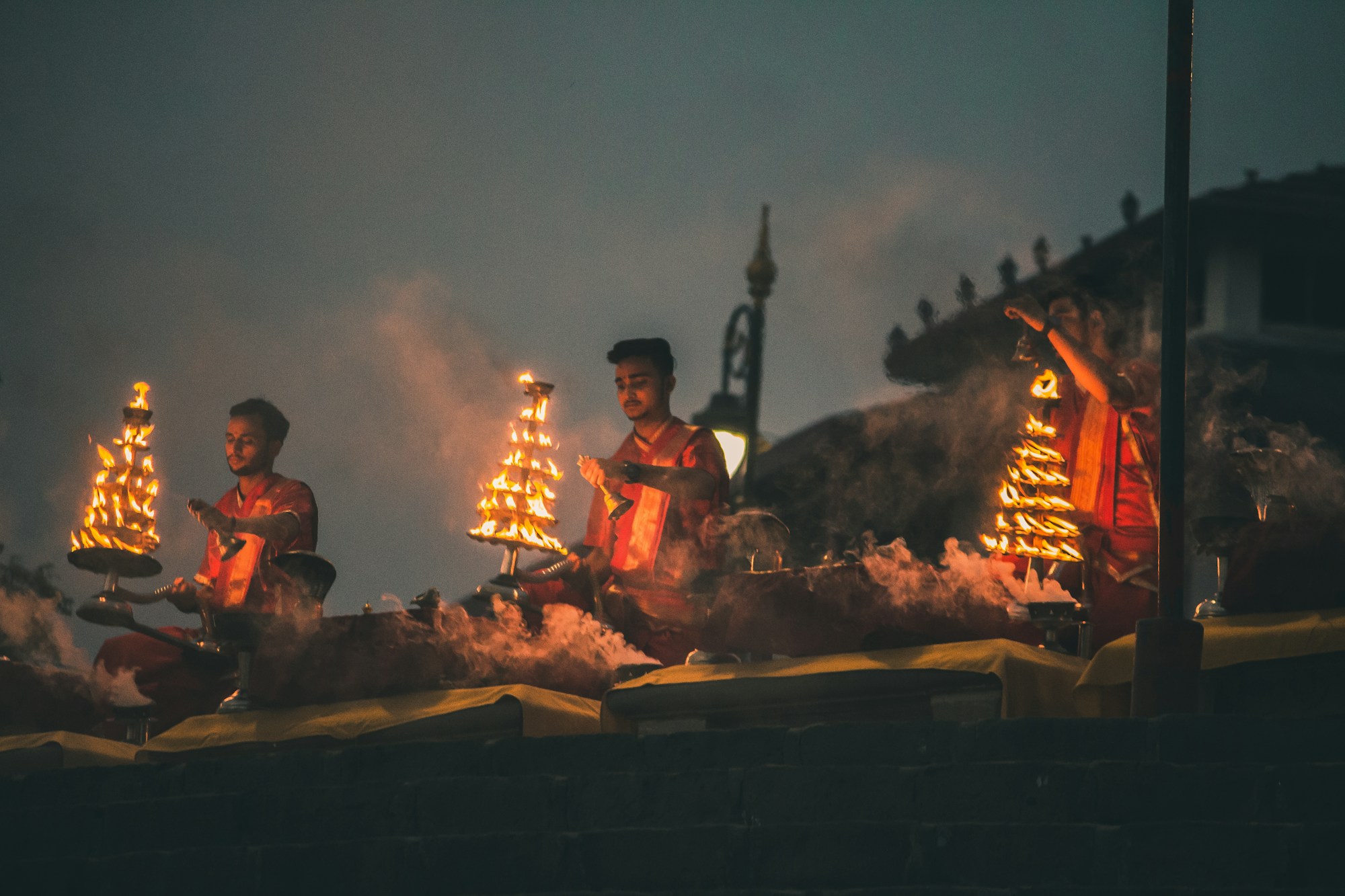
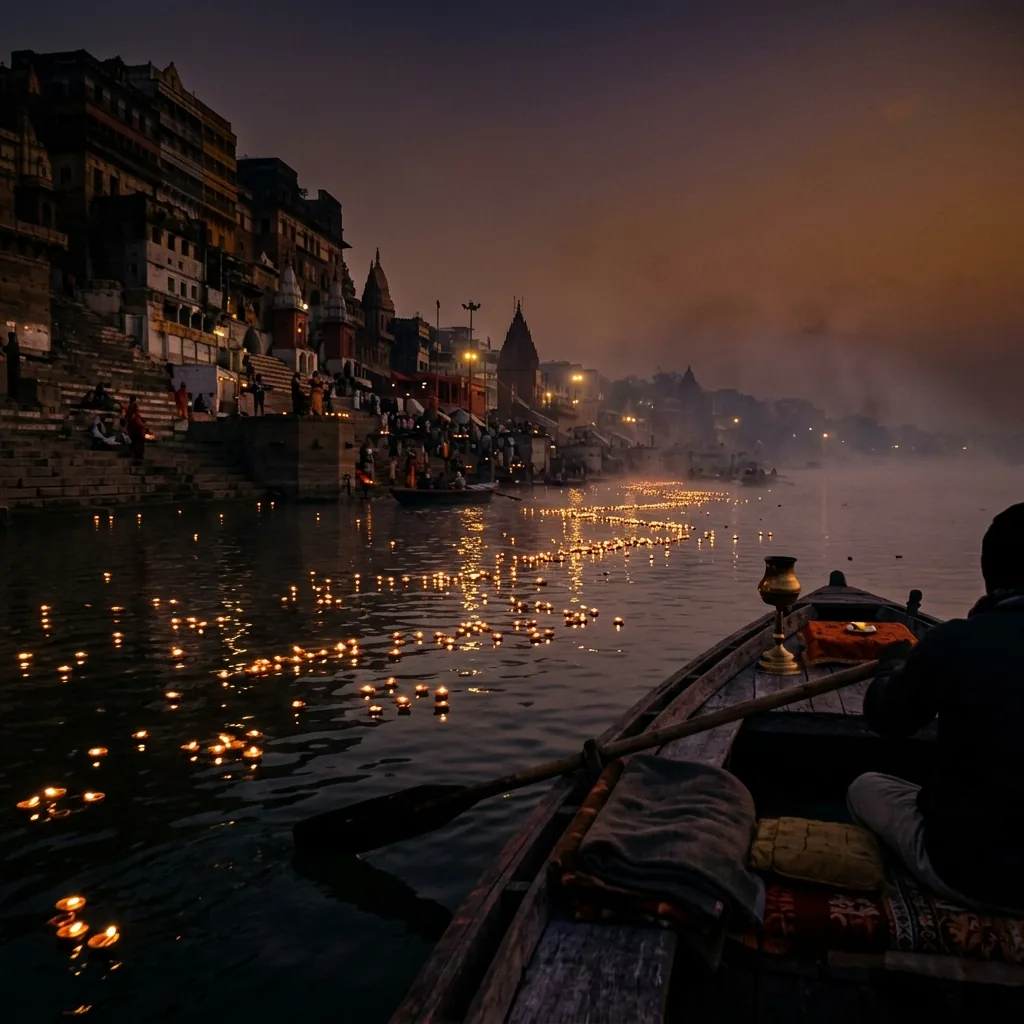
Many ragas are traditionally bound to a time of day or a season — a dawn raga, a monsoon raga — so that music, place and hour align. This is why a morning raga heard on the ghatsGhatA flight of steps leading down to a river or tank, used for bathing, worship and cremation.Read in the glossary of Varanasi as the sun lifts over the Ganges is a specific and deliberate thing rather than a poetic accident, and why hearing the right music in the right setting is one of the quiet luxuries of travelling India well.
A raga is not a tune but the grammar a tune is made from — and once you hear that, an evening of Indian music becomes a conversation to follow.
The instruments and the two traditions
The voices of North Indian, or Hindustani, music are instantly recognisable. The sitarSitarA long-necked plucked string instrument of North India, with sympathetic strings beneath the frets that ring on untouched.Read in the glossary, long-necked and shimmering, carries the melody through its sympathetic strings that ring on untouched; the sarangiSarangiA short-necked bowed instrument of North India, played by pressing the strings with the fingernails rather than the fingertips.Read in the glossary, bowed and pressed with the fingernails, comes closer than any instrument to the human voice; and beneath them the tablaTablaThe pair of hand drums that carry the rhythm of North Indian classical music — a small treble drum and a larger bass one.Read in the glossary, a pair of hand drums, keeps the rhythmic cycle, its pitch bent by the heel of the hand until the drums seem to speak. Together they make the sound most travellers picture when they imagine India.
India in fact holds two great classical systems. Hindustani music, of the north, absorbed Persian and Central Asian influence through the MughalMughalRelating to the Muslim dynasty of Central Asian descent that ruled most of the subcontinent from the sixteenth to the eighteenth century.Read in the glossary courts and leans towards improvisation and the solo instrument. Carnatic music, of the south, is more devotional and composition-led, centred on the voice and on temple traditions, and heard at its richest during the great December music season in Chennai. Both share the language of the raga, but a listener quickly learns to tell the airy expansiveness of the north from the intricate, rhythmic drive of the south.
The devotional voice: qawwali and the Sufi shrine
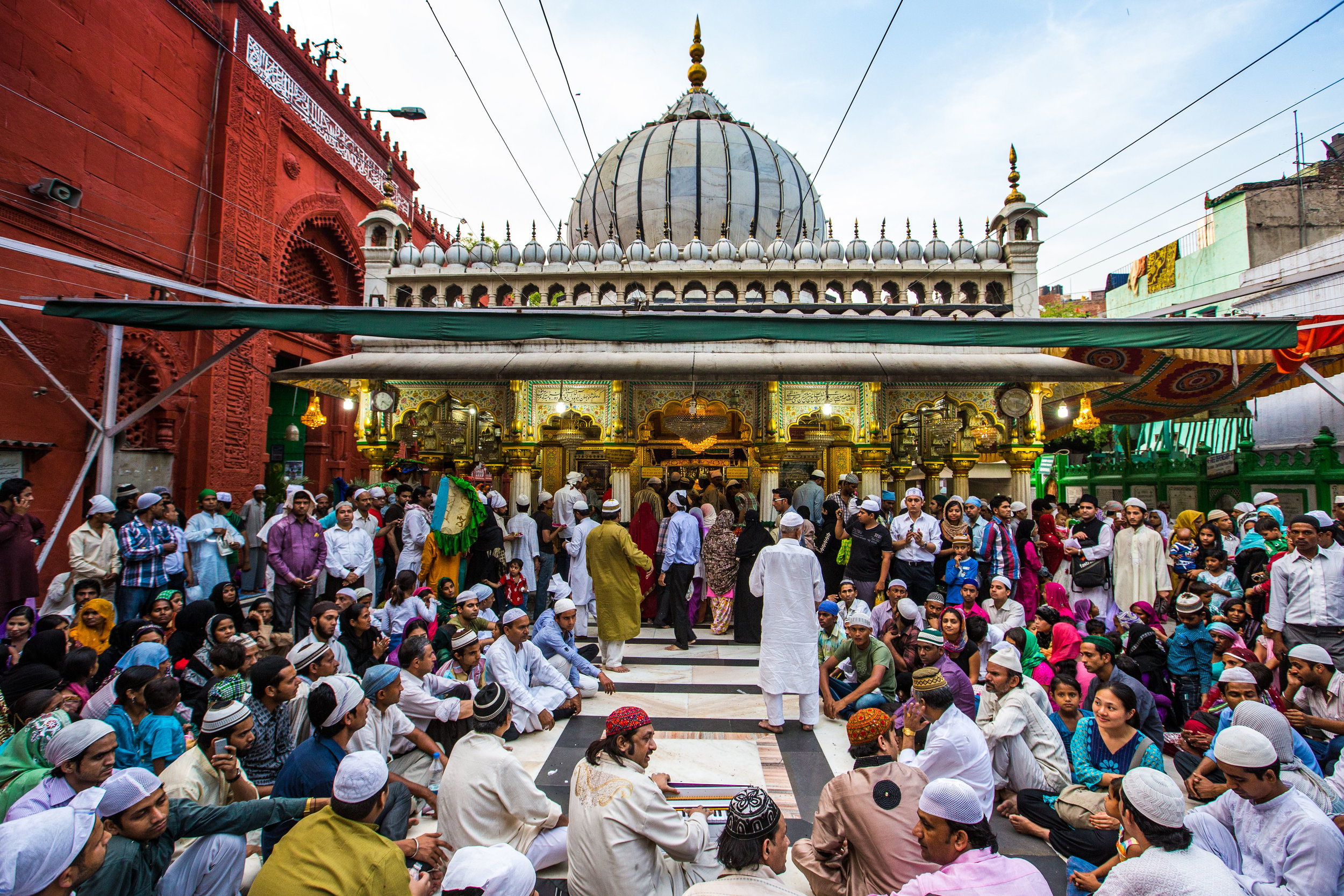
The most transporting music a traveller may encounter in India is not in a concert hall but at a dargah, the shrine of a Sufi saint, on the evening the qawwals sing. Qawwali is the devotional music of Sufi Islam — a group of singers driving a repeated verse forward over harmonium and percussion and thunderous handclaps, building over long stretches towards a kind of religious ecstasy that carries performer and listener alike.
Delhi's Nizamuddin shrine, where the qawwali tradition has its beating heart, holds its performances on Thursday evenings, the courtyard packed, heads covered, the crowd swaying as the music rises. It is not a show staged for visitors but a living act of worship that outsiders are welcome to witness with respect — and it is, for many travellers, the single most moving hour of their journey. Arriving early and staying for the long build, rather than dropping in for a photograph, is the whole point of the form.
Where to hear it live
The finest way to encounter Indian music is intimately and in the right setting: a private recital by a serious musician in a palace courtyard or a garden at dusk; the hereditary Manganiyar musicians of the Thar desert singing by firelight at a Jaisalmer fort-hotel, their repertoire an unwritten archive of the desert passed down within families; a dawn raga on the river at Varanasi; the qawwali at Nizamuddin on a Thursday. Timed to a festival, the range widens further, to the great temple music of the south and the courtly traditions of Lucknow.
Elevated India arranges these encounters through musicians and families known over years — a name at the sarangi rather than a hotel's rota, an introduction to a gharana, a private performance shaped to a guest's curiosity, and the context to understand what is being played. Music heard this way is not an interlude in a journey but one of the things a traveller remembers most vividly of India long after they are home.
Questions, Answered
What is a raga in Indian music?
A raga is the melodic framework of Indian classical music — a chosen set of notes and the rules for moving between them, within which a musician improvises. It is not a fixed tune but a grammar; many ragas are traditionally associated with a particular time of day or season.
Where can you hear live classical music in India?
At Sufi shrines such as Delhi's Nizamuddin Dargah for qawwali on Thursday evenings, at private recitals in palace courtyards, at the firelight performances of the Manganiyar musicians in the Thar desert, on the ghats of Varanasi at dawn, and during Chennai's December Carnatic season. Elevated India arranges private performances with named musicians.
Journeys That Take You There
Read Next