Wildlife & Safari7 min readPublished 2 July 2026
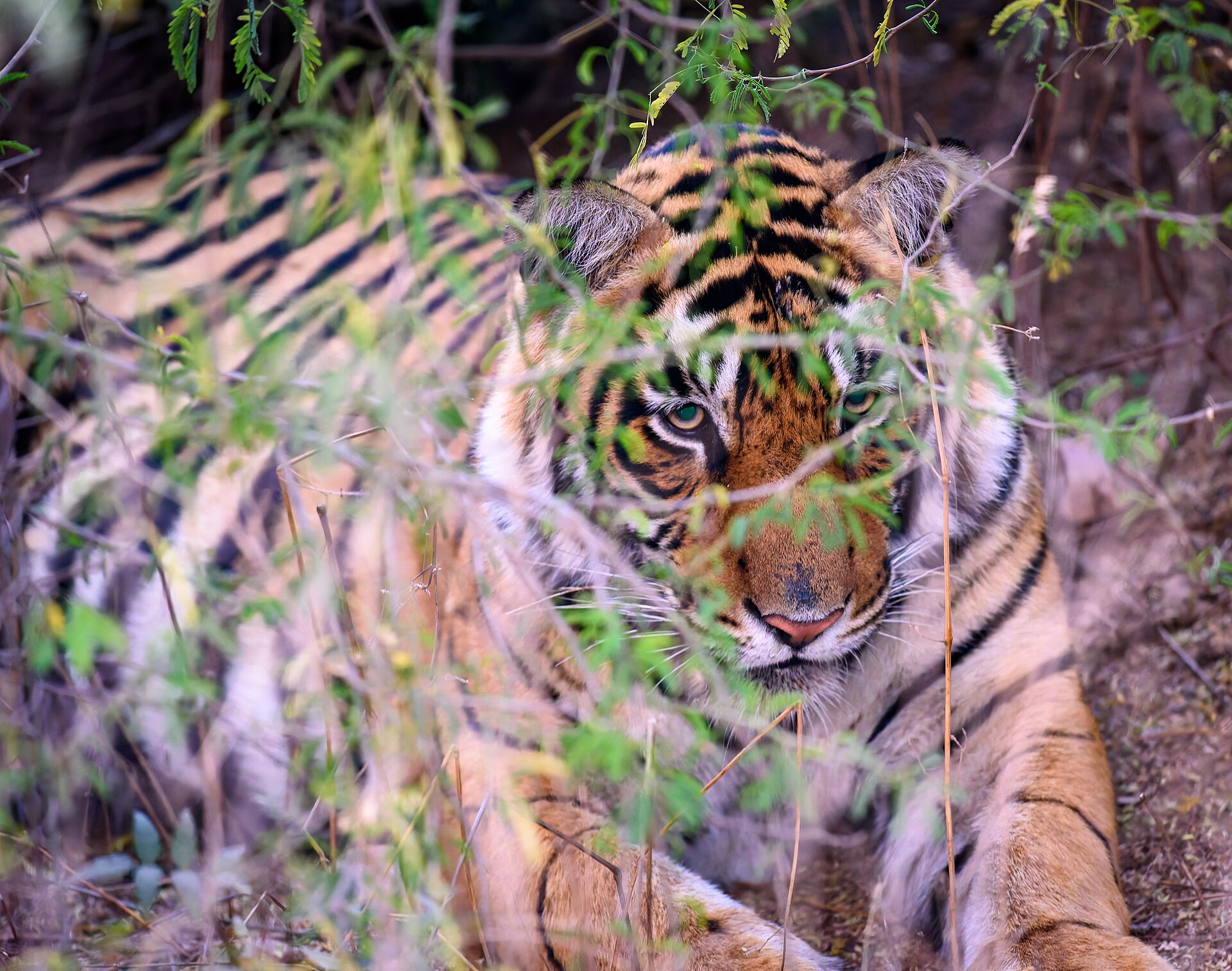
Hero photograph: Mustang Joe / Wikimedia Commons (CC0)
Ranthambore and Bandhavgarh are the two names that dominate any serious conversation about seeing a wild tiger in India — and travellers who ask us to choose between them are usually surprised to learn how different the two experiences are. One is a ruined-fort landscape three hours from Jaipur that folds neatly into a Rajasthan journey; the other is a remote sal✦salThe great hardwood of central India's forests — straight-trunked, high-canopied, cathedral-like in mature stands. Kanha's sal forests are the…Read in the glossary ↗ forest in Madhya Pradesh with, arguably, the highest tiger density in the country. The right answer depends less on which is 'better' and more on the shape of your trip.
Which reserve gives the best chance of seeing a tiger?
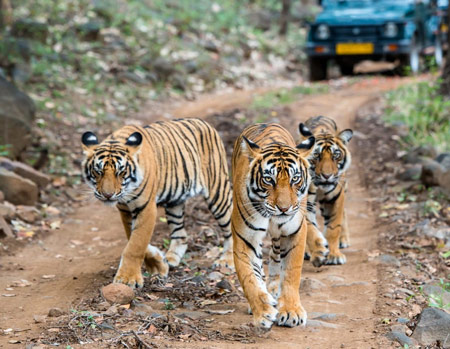
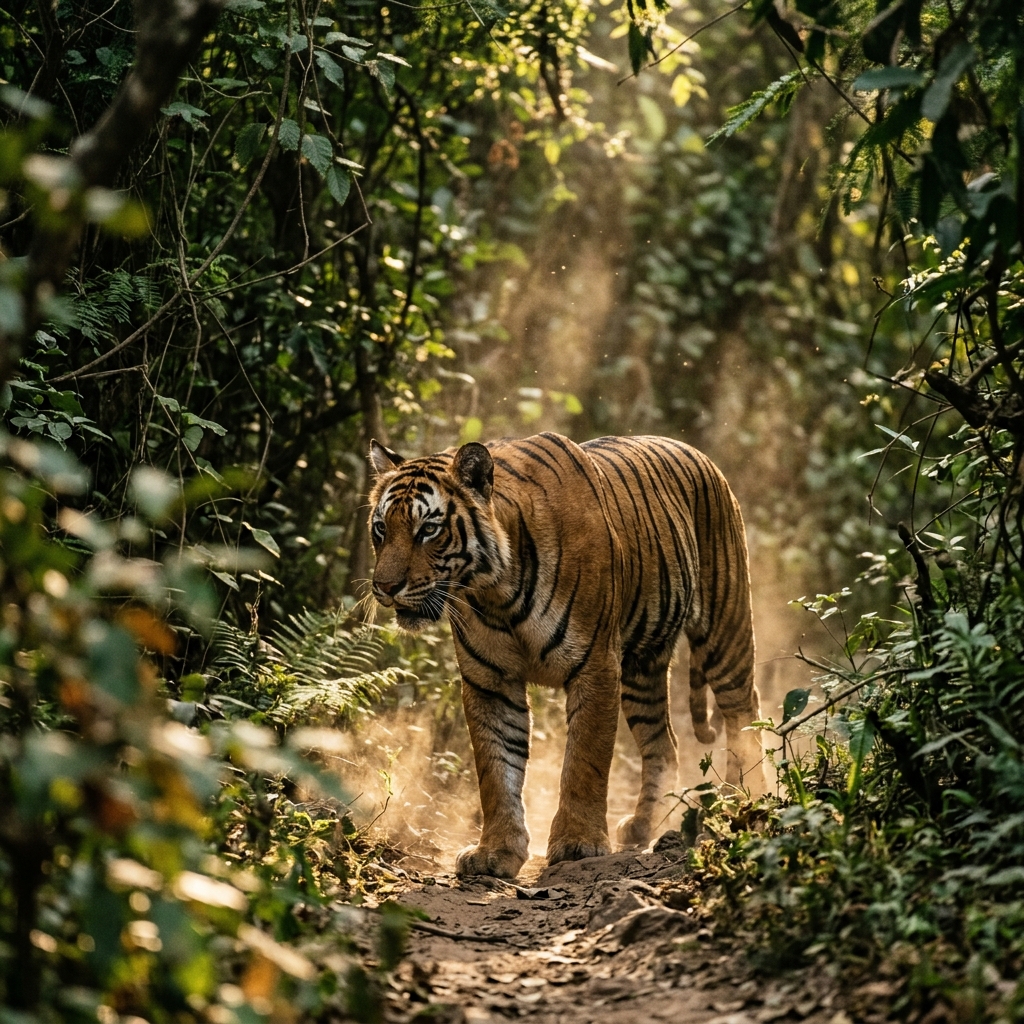
Bandhavgarh is the statistical favourite. Its compact core zones hold a famously high concentration of tigers, and over a well-planned three- to four-night stay with private morning and afternoon drives, sightings are common rather than lucky. It rewards patience and repetition — the more drives you take, the more the odds compound in your favour.
Ranthambore's tigers are fewer per square kilometre but its setting is extraordinary: a thousand-year-old fort, lakeside meadows, and banyan-shaded ruins where tigresses are often photographed against stone. Sightings are less guaranteed than Bandhavgarh but the images, when they come, are among the most cinematic in the wild-tiger world.
How do access and pairing differ?
Ranthambore wins on convenience. It sits on the Delhi–Agra–Jaipur axis, reachable by road or the comfortable train to Sawai Madhopur, which is why it pairs so easily with the Golden Triangle and a wider Rajasthan palace circuit. For a first India trip that wants both heritage and wildlife, it is the natural choice.
Bandhavgarh asks for more commitment — a flight to Jabalpur or Khajuraho and a scenic drive in — but repays it with depth and quiet. It suits the traveller for whom the tiger is the point, not a side excursion, and it combines beautifully with Kanha for a dedicated wildlife leg.
When should you go, and how does Elevated India arrange it?
Both reserves run roughly October to June and close during the monsoon. The hot, dry months of April to June concentrate wildlife around water and offer the strongest sightings, while the cooler months from November are gentler for comfort and landscape. Core zones require booked permits and there is a real difference between a good guide and an ordinary one.
Elevated India arranges private safari vehicles, senior naturalists, and the leading lodges at each reserve, and secures the specific core-zone permits that materially change your odds. Whether tiger country is the heart of your journey or a two-night thrill inside a larger itinerary, we design the reserve, the season and the number of drives around the result you are hoping for.
Questions, Answered
Is Ranthambore or Bandhavgarh better for seeing tigers?
Bandhavgarh generally offers higher tiger density and more reliable sightings over a three- to four-night stay, while Ranthambore offers fewer but more scenic encounters against its historic fort and lakes. Bandhavgarh suits a dedicated wildlife trip; Ranthambore pairs easily with Rajasthan and the Golden Triangle.
When is the best time for a tiger safari in India?
Indian tiger reserves are open roughly October to June and close for the monsoon. April to June brings the strongest sightings as animals gather at water, while November to February is cooler and more comfortable. Elevated India arranges private drives, naturalists and core-zone permits at both Ranthambore and Bandhavgarh.
Journeys That Take You There