India is one of the richest countries on earth for birds — home to well over a thousand species, from vast wetlands crowded with wintering migrants to forests full of hornbillsHornbillA large forest bird with a heavy down-curved bill, often topped by a hollow casque.Read in the glossary and Himalayan slopes where jewel-coloured pheasants forage in the snow — and its birdlife is far more accessible to the ordinary traveller than its tigers. A pair of binoculars and a good guide turn almost any Indian landscape into an aviary, and a dedicated birding journey here is among the most absorbing a naturalistNaturalistThe trained wildlife guide who accompanies guests on safari, reading tracks, alarm calls and behaviour to find animals.Read in the glossary can take.
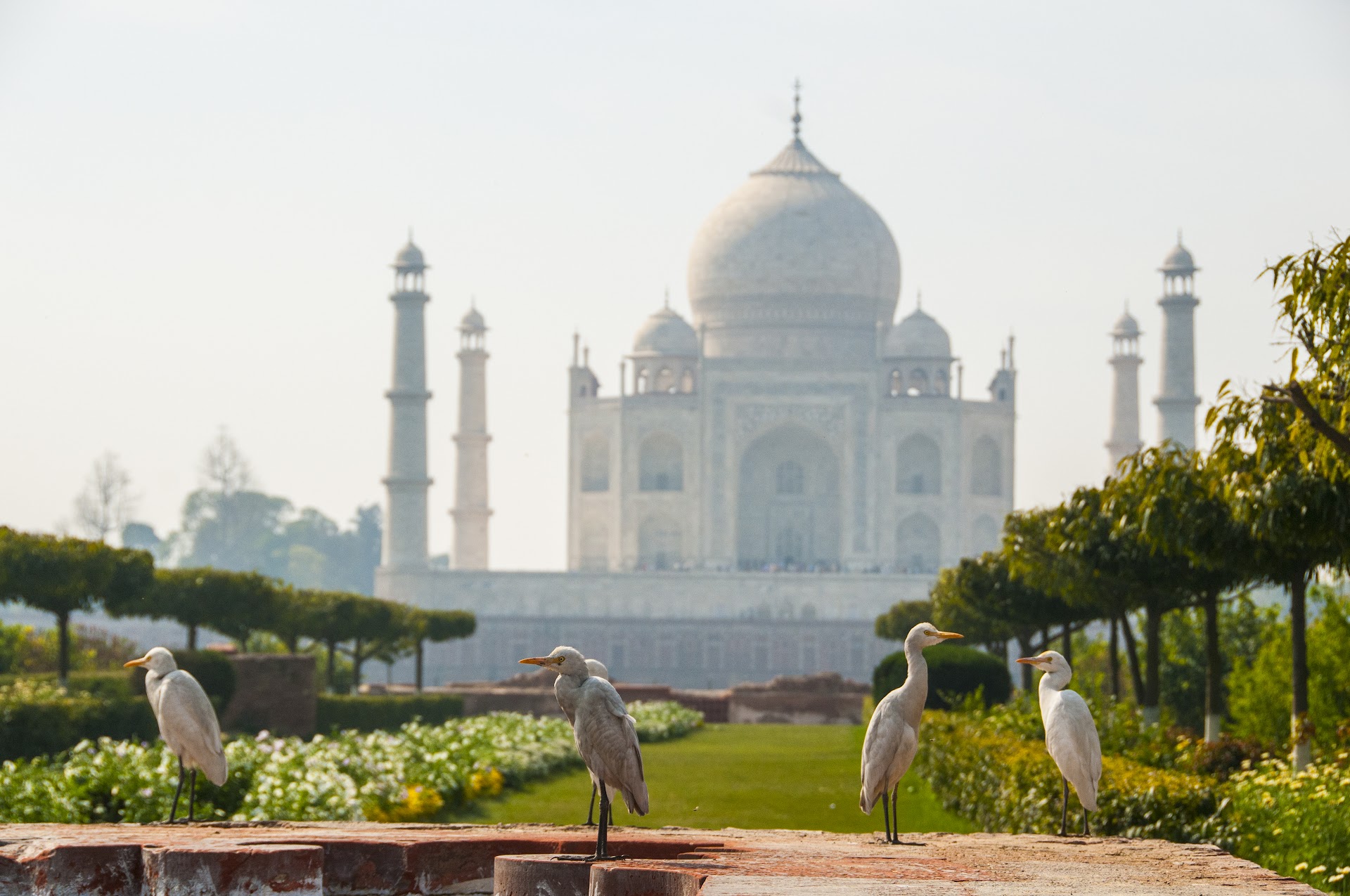
The pleasure of birding India is that the birds come to you. A single wetland in winter may hold tens of thousands of ducks, geese, storks, pelicans and cranes; a morning's walk in a southern forest can turn up hornbills, barbets and a dozen kinds of flycatcher; and even a palace garden hums with parakeets, bee-eaters and sunbirds. You do not need to be an expert to be enthralled — only to be in the right place at the right season, with someone who knows the calls.
The pleasure of birding India is that the birds come to you — a single winter wetland may hold tens of thousands, and even a palace garden hums with them.
The great wetlands: Keoladeo and Bharatpur
The most famous birding site in India is Keoladeo National Park at Bharatpur, in Rajasthan — a compact patchwork of shallow wetland and woodland that in winter becomes one of the finest congregations of waterbirds in Asia. Explored on foot or by cycle-rickshaw along its quiet bunds, it offers close, unhurried views of herons, egrets, storks, spoonbills, ibis and vast rafts of migrant ducks, with painted storks nesting in the trees and raptors overhead. It sits conveniently near Agra, and folds neatly into a Golden Triangle journey for anyone with an interest in birds.
Keoladeo is at its best from roughly November to February, when the wintering migrants are in, and a single unhurried morning here in good company can turn a casual observer into a convert. It is birding at its gentlest and most rewarding — no long drives, no early scramble, just a slow walk through a landscape alive with wings.
The Western Ghats and the endemics of the south
For the serious birder, the Western GhatsGhatA flight of steps leading down to a river or tank, used for bathing, worship and cremation.Read in the glossary — the chain of forested hills running down India's south-western flank — are the country's great prize. This is one of the world's biodiversity hotspots, holding scores of species found nowhere else on earth, and its rainforests and coffee estates reward patient watching with Malabar hornbills, trogons, endemic laughingthrushes and a wealth of colour in the canopy. The tea and spice country around Munnar and Thekkady makes a comfortable base, pairing birding with the wider pleasures of Kerala.
The great hornbill of these forests announces itself before it appears, its wingbeats audible well before the bird crosses a clearing — the kind of encounter that stays with a traveller. Birding the Ghats rewards a slower, forest pace than the wetlands: early mornings, quiet trails, and a naturalist with the ear to pick a rarity out of the dawn chorus.
The Himalaya and the forests of central India
The Himalaya offer birding of an entirely different character: high-altitude specialists found nowhere in the lowlands — brilliantly coloured pheasants and the iridescent Himalayan monal among them, along with rosefinches, laughingthrushes and, for the fortunate, a soaring lammergeier. The foothills and mid-mountains of the north, around the hill stations and in the Himalayan national parks, reward a traveller willing to climb for their birds and to endure a colder, clearer air.
Central India adds a further dimension by pairing birds with big game. The great tiger reserves — Kanha, Bandhavgarh, Pench — are superb birding grounds in their own right, their forests and grasslands full of eagles, owls, rollers and woodpeckers, so that a safari drive for tigers doubles as a birding transect. For many travellers this is the ideal introduction: the thrill of the tiger and the constant, quieter reward of the birds along the way.
Planning a birding journey
The birding season across most of India runs from November to March, when the winter migrants have arrived and the weather is clear and cool; the pre-monsoon months add breeding plumage and song, at the cost of heat. A rewarding itinerary might string together a northern wetland such as Keoladeo, a central tiger reserve and a stretch of the Western Ghats — or, for a specialist, focus deeply on a single region.
The naturalist makes the journey. Elevated India pairs guests with genuinely expert birding guides — the difference between a pleasant walk and a memorable list is entirely in the ear and eye of the person beside you — and composes the days around the light, the season and each traveller's level, from the committed lister to the curious beginner. Set within the comfort of India's finest lodges and hotels, it is birdwatching without hardship, and all the richer for it.
Questions, Answered
Where is the best birdwatching in India?
Keoladeo National Park at Bharatpur is India's most celebrated wetland for wintering migrants; the Western Ghats hold the country's endemic forest species; the Himalaya offer high-altitude specialists such as pheasants; and the central tiger reserves double as excellent birding grounds. The season runs mainly November to March.
When is the best time for birding in India?
November to March, when winter migrants have arrived and the weather is cool and clear, is the prime birding season across most of India. The pre-monsoon months bring breeding plumage and song but also heat. A good local naturalist matters more than any other single factor.
Journeys That Take You There
Read Next