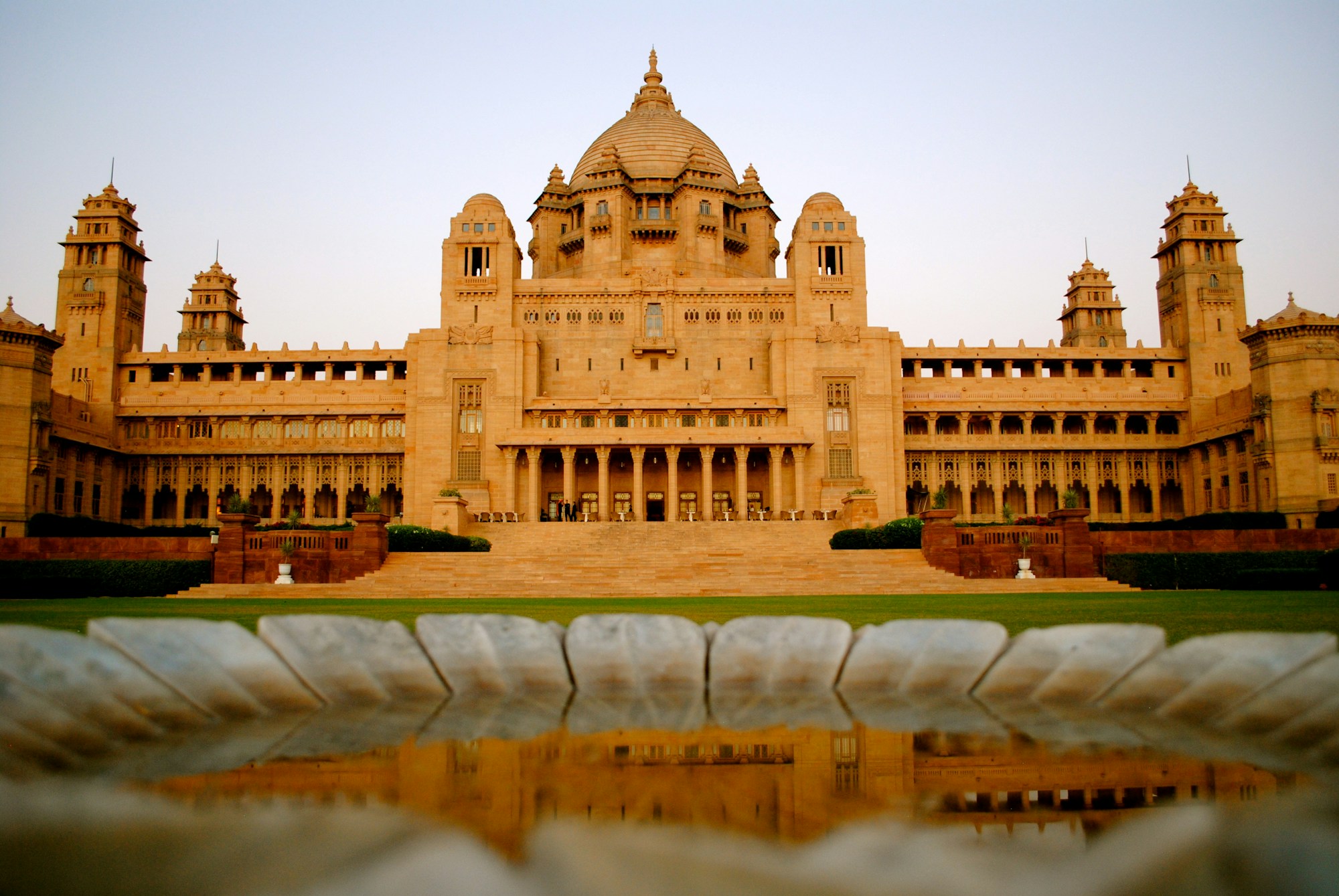
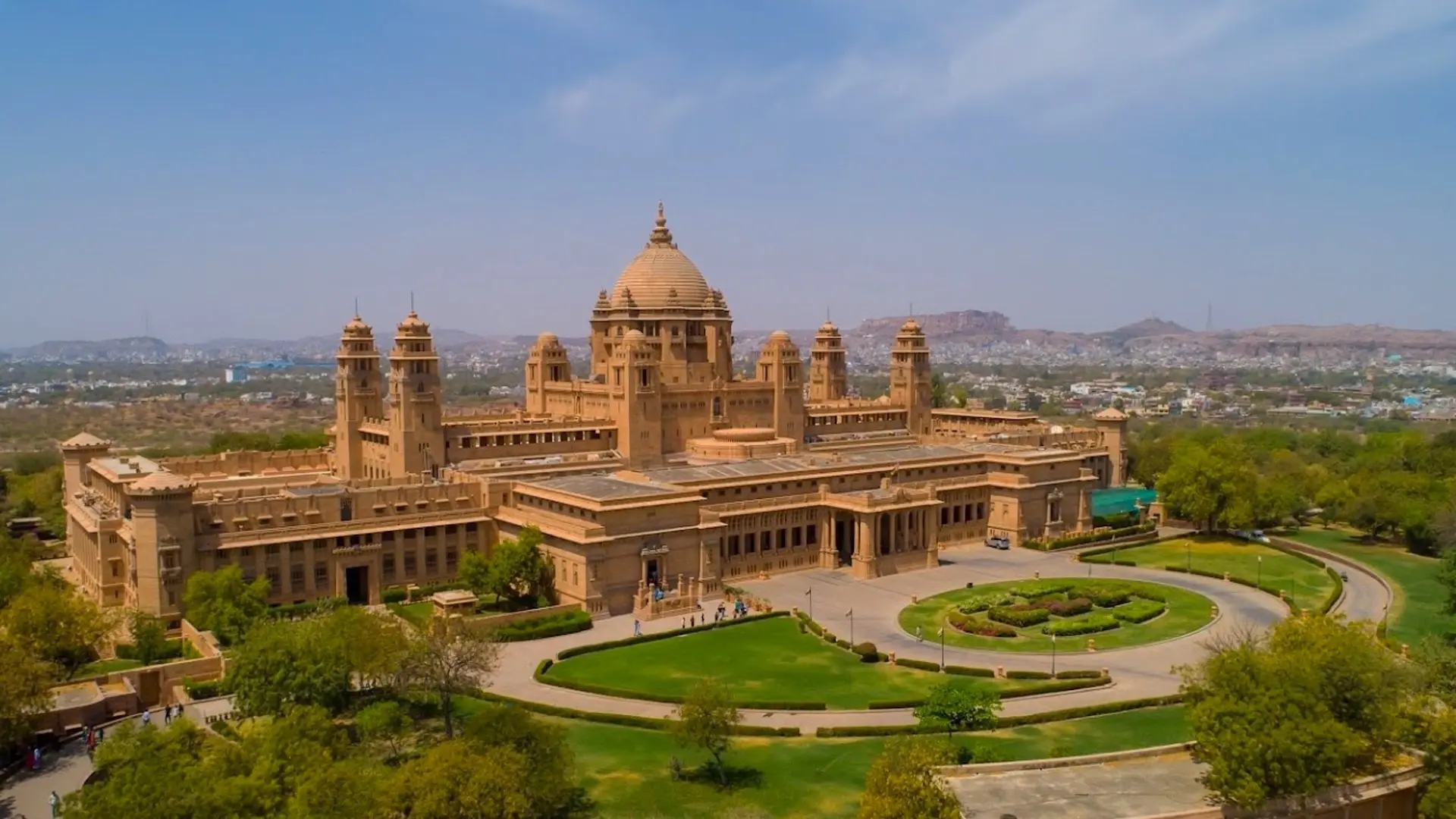
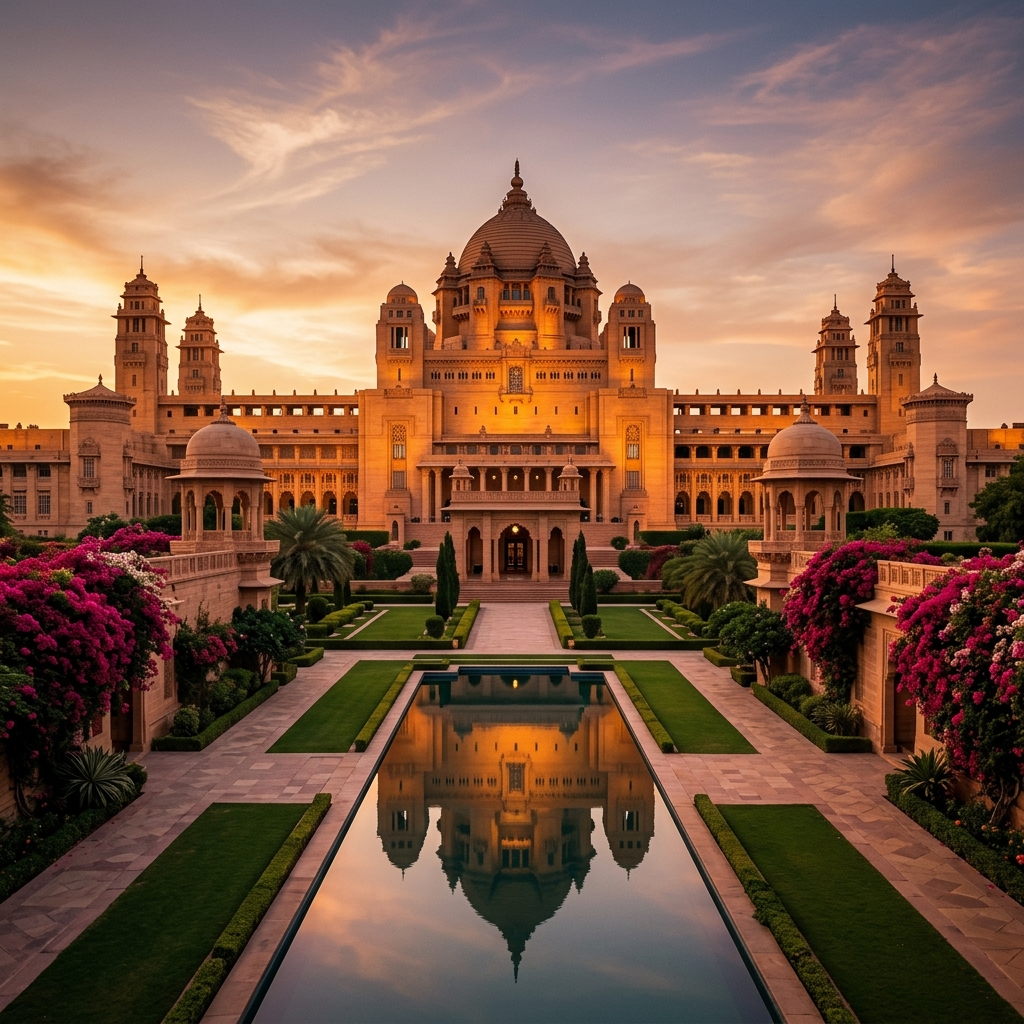
Umaid Bhawan is the last of the great Indian palaces — begun in 1928, finished in 1943, and conceived partly as a famine-relief project that employed three thousand workers for fifteen years. The result is one of the world's largest private residences: a golden sandstone colossus on Chittar Hill whose 105-foot cupola glows above Jodhpur at dusk.
The building splits three ways — the royal family still occupies one wing, a museum fills another, and the Taj-run hotel holds the rest. Art Deco runs pure throughout: the palace furniture was re-commissioned from Polish designer Stefan Norblin after a wartime shipment was torpedoed, and his murals still line the suites.
Why We Place Guests Here
- Staying in a palace the royal family still inhabits changes the register of the visit — this is a residence receiving guests, not a monument converted.
- The subterranean Zodiac Pool, mosaic-lined and lamplit, may be the most atmospheric hotel pool in India.
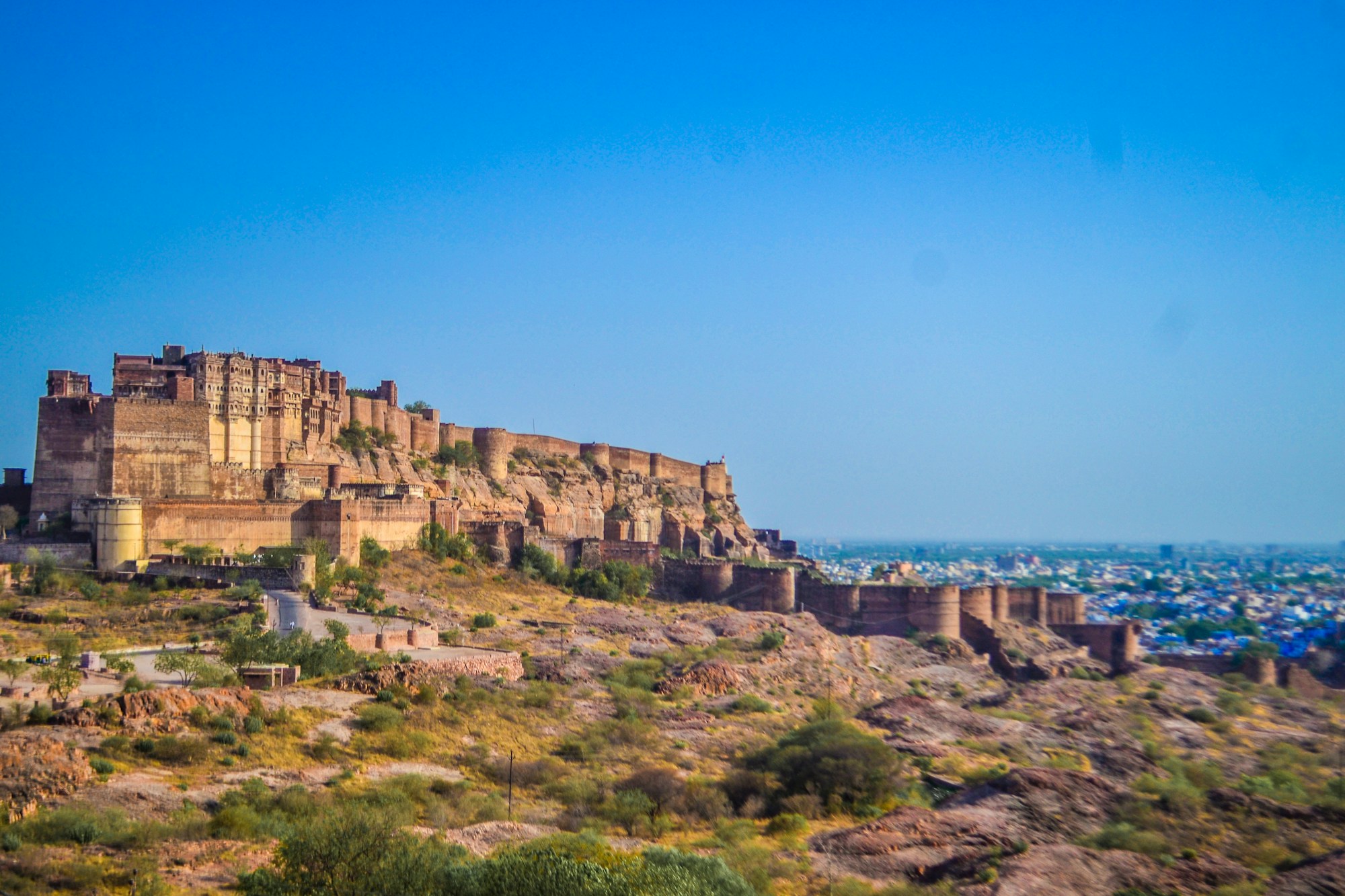
- Sundowners on the Baradari lawns, with Mehrangarh Fort floodlit across the city, close a Jodhpur day perfectly.
The Table
- Risala — Indian and European fine dining
- Pillars — colonnaded all-day terrace over the lawns
- The Trophy Bar — hunting-lodge era memorabilia
The Elevated India Signature
Private museum viewing with the palace curator, including the maharaja's classic car collection.
Questions, Answered
Does the royal family still live at Umaid Bhawan Palace?
Yes — Maharaja Gaj Singh II and his family occupy a private wing of the palace. The hotel operates in its own wing under Taj, alongside a museum of the palace's Art Deco history.
How many rooms does Umaid Bhawan Palace have?
The palace was built with 347 rooms; the Taj hotel within it offers around 70 rooms and suites, many with Stefan Norblin's original Art Deco murals and furniture.
Journeys That Take You There
Grand Rajasthan: Royal Palaces & Desert Estates
19 Days / 18 Nights
The Royal Rajasthani Circuit: Lakes, Dunes & Fortresses
18 Days / 17 Nights
Explore the destination guide: Jodhpur, Rajasthan ↗