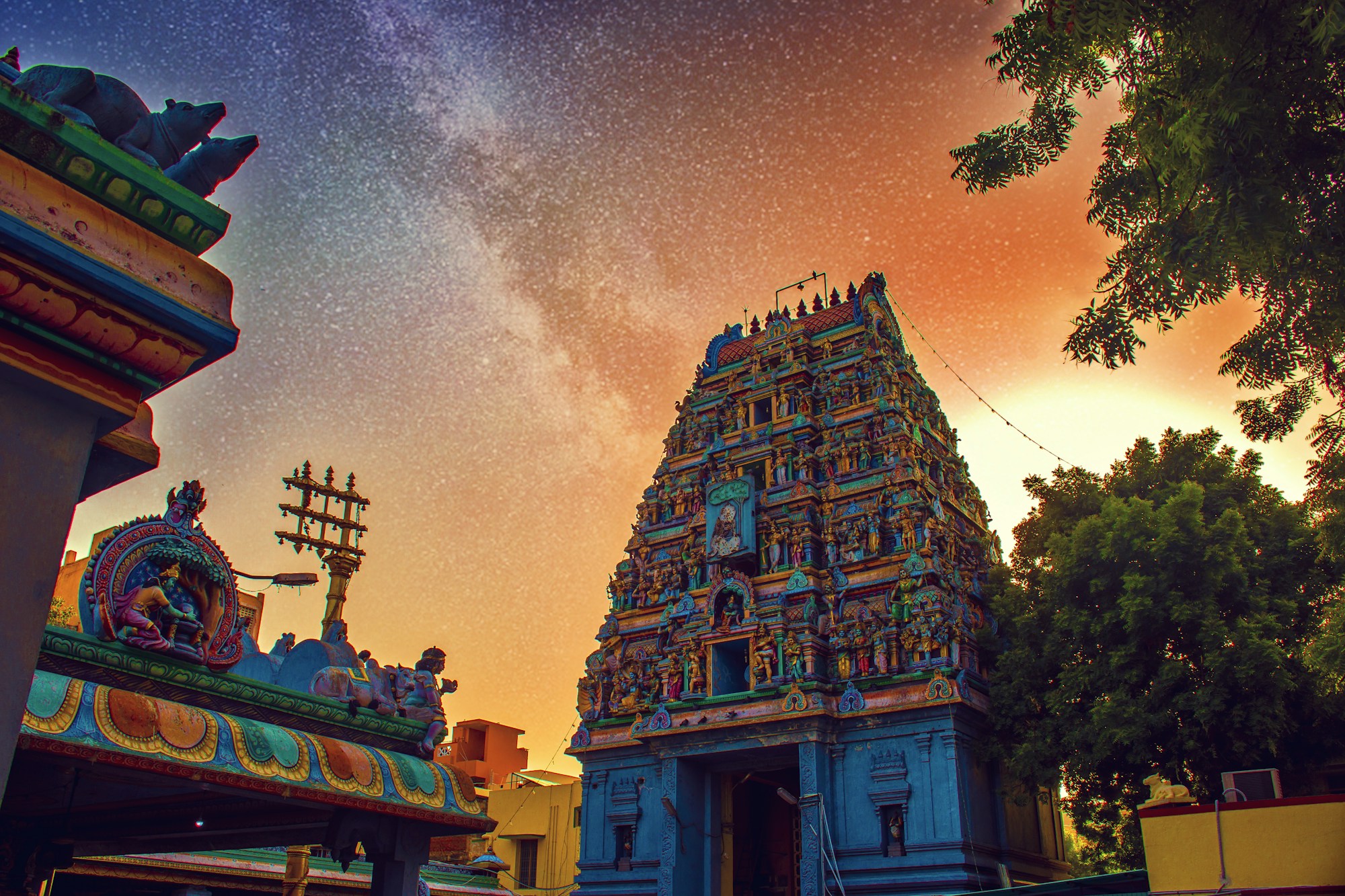
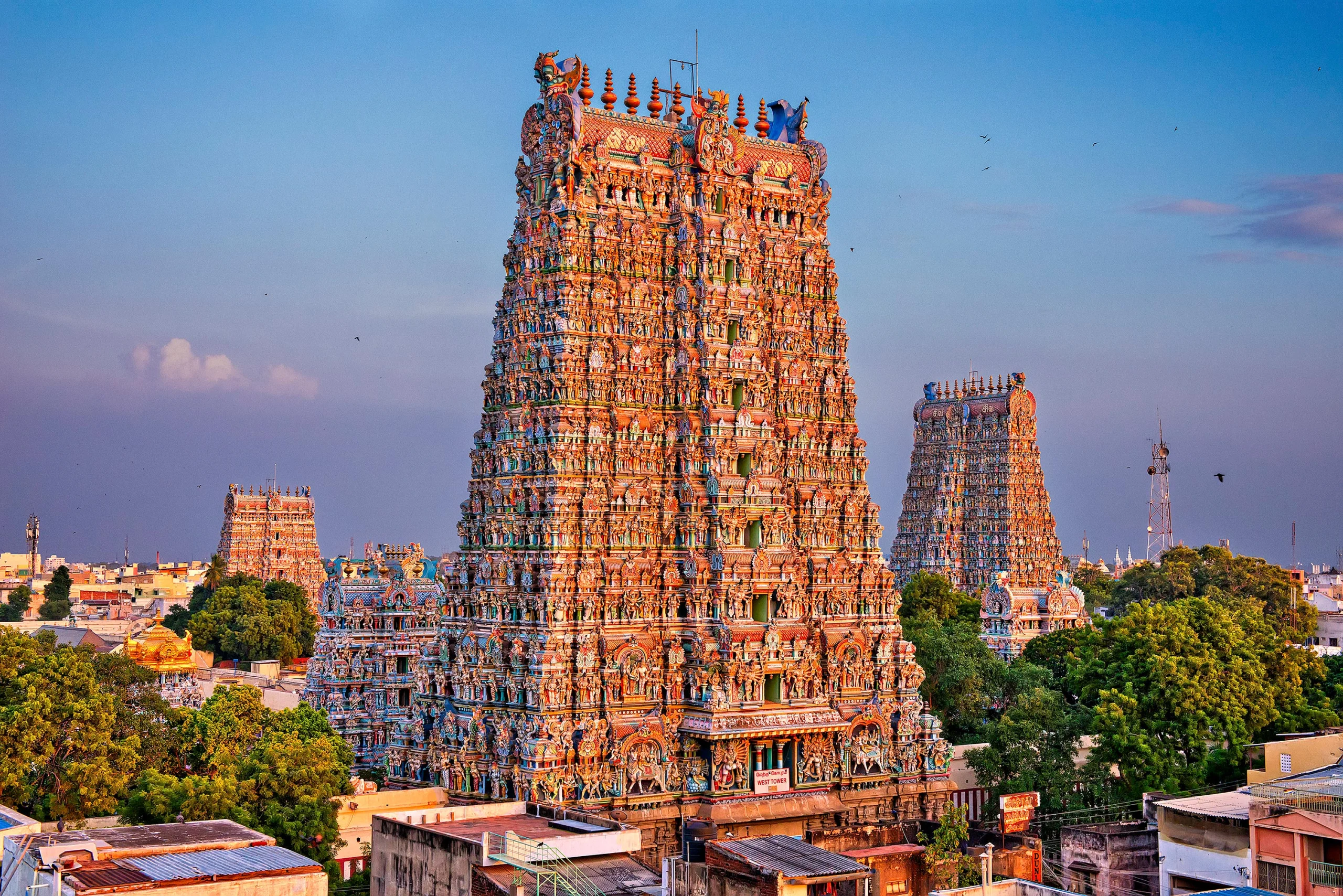
Madurai is built as a mandala with the Meenakshi Amman Temple at its bullseye — fourteen gopurams✦gopuramsThe monumental gateway tower of a South Indian temple, rising in painted tiers of gods and myths. Madurai's Meenakshi Temple raises fourteen of them,…Read in the glossary ↗ stacked with tens of thousands of painted deities, the tallest rising over fifty metres, around a fourteen-acre sacred city of corridors, tanks and shrines. The presiding deity is the goddess herself: Meenakshi, the fish-eyed queen, with Shiva as her consort.
What overwhelms is not scale but continuity. Ritual here has run essentially unbroken for centuries — morning chants flowing into flower commerce into the night ceremony, when Shiva's palanquin is carried, with drums and flame, to the goddess's chamber to close the day.
Visiting Well
- Early morning and the 9 p.m. night ceremony are the essential hours; build the day's rest around them.
- Dress modestly, shoulders and knees covered; cameras are restricted inside — the memory does the work.
- The Hall of a Thousand Pillars and its musical stone columns anchor the museum corner.
How Elevated India Arranges It
We attend the night ceremony with a temple-raised guide who narrates the procession's meaning — then jigarthanda in the old town after, because Madurai's sacred and street lives share the same hour.
Questions, Answered
What is the night ceremony at Meenakshi Temple?
Each night (around 9–9:30 p.m.) the image of Shiva is carried in procession with drums, flame and chanting to Meenakshi's chamber, symbolically closing the temple day. It is among South India's most moving living rituals, open for respectful visitors to witness.
Can non-Hindus enter Meenakshi Temple?
Yes — visitors of all faiths may enter the complex and corridors, with modest dress and footwear removed; only the innermost sanctums are reserved for Hindus.
Journeys That Take You There
Explore the destination guide: Madurai, Tamil Nadu ↗